
Compliance
Commercial Kitchen Ventilation Requirements in Australia: NCC, AS 1668 and Food Standards
Planning a fit-out or checking an existing kitchen? Here is how the National Construction Code, AS 1668 and the food safety standards shape commercial kitchen ventilation in Australia.
By Apex Commercial Exhaust · · 6 min read
Key takeaways
- NCC clause F6D12 covers kitchen local exhaust ventilation for larger cooking setups.
- Under the Deemed-to-Satisfy Provisions, exhaust hoods must comply with AS 1668.1 and AS 1668.2.
- Food Standard 3.2.3 requires ventilation that effectively removes fumes, smoke, steam and vapours.
- These rules cover design and installation; maintenance and cleaning are a separate obligation.
- Ask a qualified mechanical engineer or contractor about design questions, and your council about food premises fit-outs.
Kitchen ventilation rules in Australia come from building codes, Australian Standards and food safety law. If you are fitting out a new kitchen, changing your cooking equipment or simply want to understand your system, this overview explains where each requirement comes from. It is general information; design questions belong with a qualified mechanical engineer or contractor.
The National Construction Code (NCC)
NCC clause F6D12 deals with kitchen local exhaust ventilation. The Australian Building Codes Board’s guide explains that it aims to limit grease build-up that creates health and fire risks, reduce steam and smoke from cooking, and keep air moving to control odours. Whether exhaust is required depends on the size and number of electrical or gas cooking appliances relative to the room.
AS 1668.1 and AS 1668.2
Under the NCC’s Deemed-to-Satisfy Provisions, kitchen exhaust hoods must comply with AS 1668.1 (fire and smoke control) and AS 1668.2 (mechanical ventilation). These standards deal with design and installation, such as hood and duct requirements. They are not a cleaning schedule.
Food safety: Standard 3.2.3
Food Standards Code Standard 3.2.3 Food Premises and Equipment requires sufficient natural or mechanical ventilation to effectively remove fumes, smoke, steam and vapours from food premises. FSANZ’s Safe Food Australia guide explains how the food safety standards apply. Councils usually check this when approving and inspecting food premises.
Read how maintenance relates to design rules
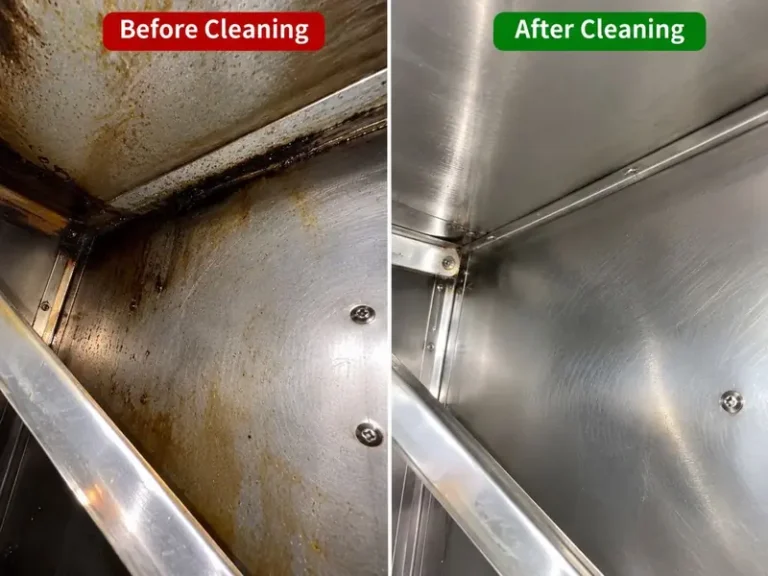
A well-designed system still collects grease in use. Maintenance obligations can come from AS 1851, essential safety measures listed for your building, your lease and your insurer. See our guides on AS 1851 and requirements in Victoria.
Within the agreed scope, Apex cleans all accessible and reachable areas of the kitchen exhaust system and records any areas that could not be accessed, which is useful information for your mechanical contractor.
Quick checklist for kitchen operators
- New fit-out or new equipment? Talk to a mechanical engineer and your council early.
- Existing kitchen? Keep design documents and maintenance records together.
- Smoke or heat problems? Check filters and cleaning first, then ask a technician about airflow and design.
Frequently asked questions
Does every commercial kitchen need an exhaust hood?
NCC clause F6D12 sets when kitchen local exhaust is required based on the size and number of cooking appliances relative to the room. Your council and building surveyor can confirm what applies.
Does AS 1668 apply to kitchen exhaust systems?
Yes. Relevant parts of the AS 1668 series cover kitchen exhaust design and installation, separate from routine maintenance.
Who checks ventilation in food premises?
Local councils generally assess food premises under food safety law, including ventilation that removes fumes, smoke, steam and vapours.
References & further reading
Government, regulator and Standards sources mentioned in this guide (links checked November 2026; requirements can change, so check the current version):
- Australian Building Codes Board (ABCB), NCC guide: F6D12 Kitchen local exhaust ventilation
- Standards Australia, AS 1668.1-2015 The use of ventilation and air conditioning in buildings, Part 1: Fire and smoke control in buildings
- Standards Australia, AS 1668.2-2024 The use of ventilation and air conditioning in buildings, Part 2: Mechanical ventilation in buildings
- Food Standards Australia New Zealand, via the Federal Register of Legislation, Standard 3.2.3 Food Premises and Equipment (Australia only)
- Food Standards Australia New Zealand (FSANZ), Safe Food Australia: A guide to the Food Safety Standards
Need help with your kitchen exhaust? Apex Commercial Exhaust cleans canopies, exhaust ducts, rooftop fans and grease filters for commercial kitchens across Melbourne and Victoria.
This article is general information only and is not legal, insurance or compliance advice. Requirements for your kitchen depend on your system, building and obligations.
On this page
Free quote
Canopy, duct, exhaust fan and grease filter cleaning across Melbourne.
Keep reading
Related Guides
Compliance
AS 1851, AS 1668, insurance conditions and lease terms can all affect your kitchen exhaust maintenance. Here is a plain-English overview of how they fit together and the records worth keeping.
· 6 min read
Compliance
Exhaust cleaning responsibility often depends on the lease, the building and who owns the equipment. Here is a plain-English overview for Victorian restaurants, cafés and food courts.
· 5 min read
Free quote
Get a Free Commercial Kitchen Exhaust Cleaning Quote in Melbourne
Helping keep your kitchen exhaust system cleaner, better maintained and ready for your next busy service.