
Home / Blog
Apex blog · guides & advice
Commercial Kitchen Exhaust Cleaning Blog: Guides for Melbourne Kitchens
Practical Advice on Canopy, Duct, Exhaust Fan and Grease Filter Cleaning, Costs and AS 1851
25 clear, practical guides from Apex Commercial Exhaust Pty Ltd for restaurant owners, café operators, facility managers and anyone responsible for a commercial kitchen exhaust system, with references to the government and Standards sources behind them.
Read more
Our articles answer the questions we hear most often: how often a kitchen exhaust should be cleaned, what a complete clean includes, what affects the cost, how AS 1851 and other obligations fit together, and when grease filter exchange makes sense.
The guides are written for commercial kitchens across Melbourne and Victoria, and are useful for kitchen operators anywhere in Australia researching kitchen exhaust maintenance. Where an article relies on a government page, regulation, Australian Standard or official publication, it is linked in the text and listed under “References” at the end.
They are general information; requirements for your kitchen depend on your system, building and obligations. New guides are added regularly.
- Maintenance
- Compliance
- Costs & quotes
- Canopies
- Ducts
- Exhaust fans
- Grease filters
- Fire safety
Featured guide
Start Here: The Most-Asked Kitchen Exhaust Question
Maintenance
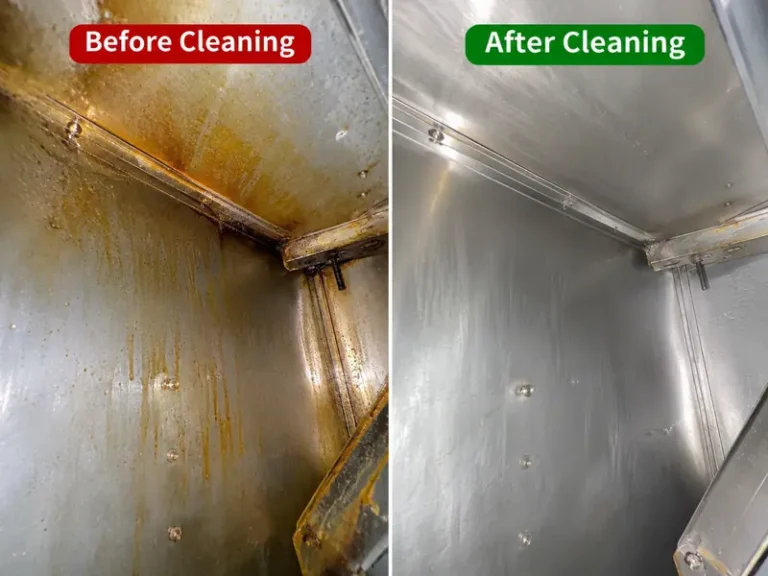
There is no single interval that suits every kitchen. Here is what decides how often your canopy, ducts, exhaust fan and grease filters need cleaning, and how to build a schedule around it.
· 6 min read
All articles
Exhaust Cleaning Blog: Guides & Advice
Choose a topic or browse every guide on canopy cleaning, exhaust duct cleaning, rooftop exhaust fans, grease filters, costs, compliance and fire safety.
Costs & quotes
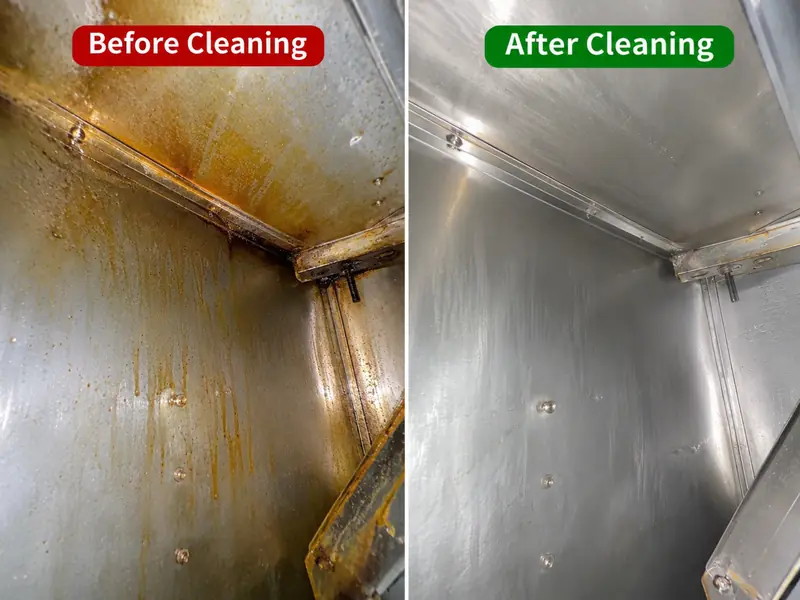
Kitchen exhaust cleaning prices vary widely because no two systems are the same. Here are the factors that shape a quote, and the details that help you get an accurate one quickly.
· 5 min read
Services
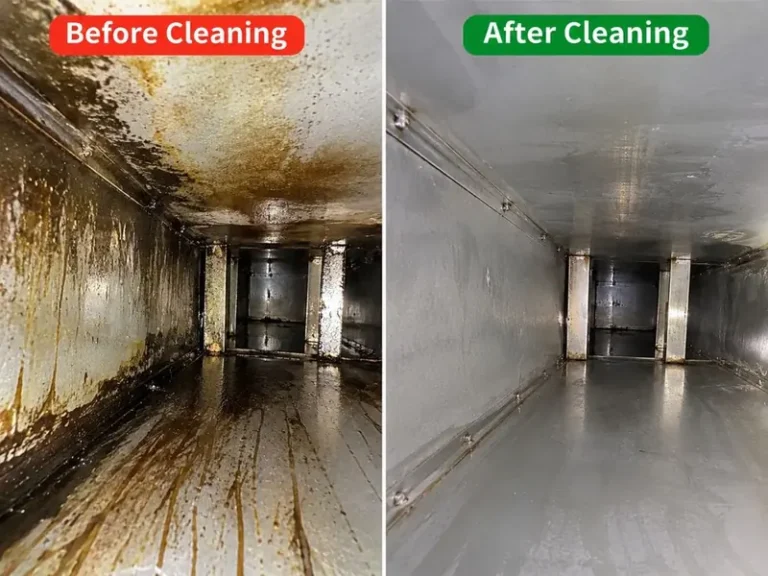
A canopy-only wipe-down and a complete exhaust system clean are very different jobs. Here is what a full commercial kitchen exhaust clean can include, and the questions to ask before you book.
· 7 min read
Compliance
Victorian kitchen operators often ask what the law actually requires. Here is how essential safety measures, AS 1851, the National Construction Code and food safety rules fit together.
· 7 min read
Compliance
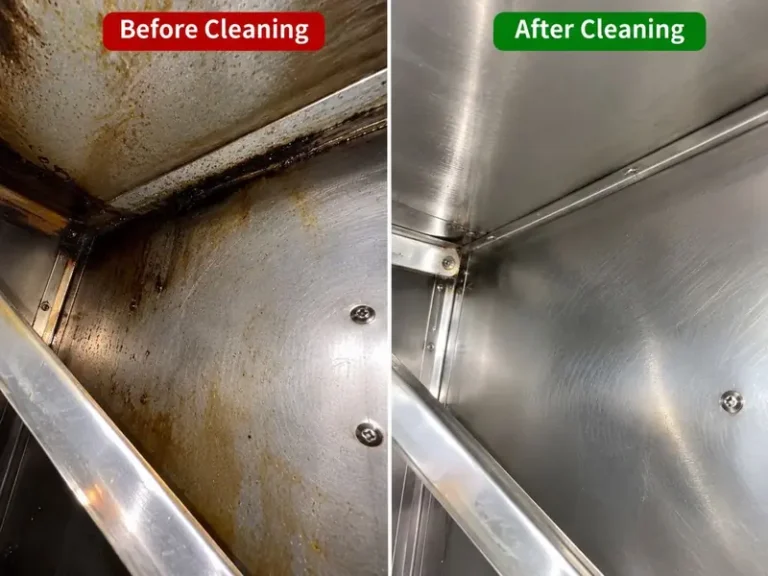
AS 1851, AS 1668, insurance conditions and lease terms can all affect your kitchen exhaust maintenance. Here is a plain-English overview of how they fit together and the records worth keeping.
· 6 min read
Services
Your canopy is the most visible part of the exhaust system, but the grease that matters is often behind the filters. Here is what professional canopy cleaning covers and how it is done.
· 6 min read
Fire safety
Grease that settles inside canopies, ducts and fans is fuel. Here is how kitchen exhaust fires start and spread, and what fire services and insurers suggest you do about it.
· 6 min read
Choosing a provider
Not every exhaust clean is the same. These ten questions help you compare providers on what matters: scope, safety, insurance, documentation and clear quotes.
· 6 min read
Grease filters
Grease filters need the most frequent attention of any part of your exhaust system. Should your staff clean them, or should clean filters simply arrive on a schedule? Here is how the two options compare.
· 5 min read
Maintenance
Grease builds up quietly inside canopies, ducts and fans. These seven signs suggest it is time to book an inspection and clean, plus what not to do while you wait.
· 5 min read
Maintenance
A simple routine your team can follow between professional cleans. Adapt this checklist to your cooking style, equipment and the manufacturer’s instructions.
· 5 min read
Maintenance
Skipping exhaust cleans saves money in the short term. Here is what grease does to canopies, ducts and fans over time, and the knock-on effects for safety, hygiene, inspections and insurance.
· 5 min read
Maintenance
Good records show what was cleaned, when, and what was found. Here is what to keep in your kitchen exhaust file and who may ask to see it.
· 5 min read
Compliance
Planning a fit-out or checking an existing kitchen? Here is how the National Construction Code, AS 1668 and the food safety standards shape commercial kitchen ventilation in Australia.
· 6 min read
Compliance
Exhaust cleaning responsibility often depends on the lease, the building and who owns the equipment. Here is a plain-English overview for Victorian restaurants, cafés and food courts.
· 5 min read
Compliance
Insurers take kitchen exhaust fires seriously. Here is what published insurer guidance says about cleaning, and the records that help if your insurer ever asks.
· 5 min read
Maintenance
Dripping grease is one of the clearest signs a canopy needs attention. Here are the usual causes, what staff can safely check, and when to book a professional clean.
· 4 min read
Services
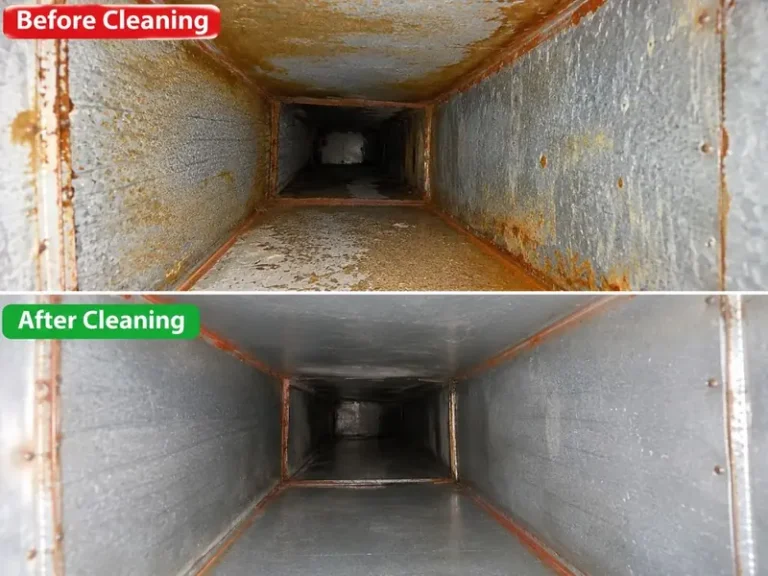
Exhaust ducts are where grease hides. Here is how commercial grease duct cleaning works, what access is needed, and why the ductwork matters as much as the canopy.
· 6 min read
Services
The rooftop exhaust fan does the heavy lifting for your whole system, yet it is often left out of cleaning. Here is what fan cleaning covers and when you need a technician as well.
· 5 min read
Maintenance
Smoke rolling out from under the canopy? Poor extraction has several possible causes. Here are eight of the most common, what you can check safely, and when to call a specialist.
· 6 min read
Grease filters
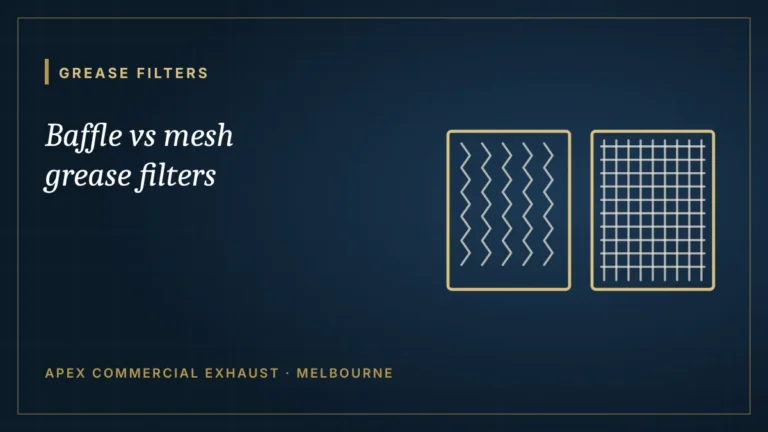
Grease filters are the first line of grease capture in your canopy. Here is how baffle and mesh filters differ, how to clean them safely, and what to check before buying replacements.
· 5 min read
Industries
Fryers, grills and long trading hours mean more grease, faster. Here is how fish and chip shops, burger bars, pizza and kebab shops can stay on top of exhaust cleaning.
· 5 min read

Industries
Institutional kitchens feed residents, patients and students every day. Here is how to plan exhaust cleaning around meal services, site rules and record-keeping.
· 5 min read
Choosing a provider
Some exhaust cleaning is everyday kitchen work; some needs trained contractors, access equipment and safety planning. Here is where the line usually sits.
· 5 min read
Guides
Quotes and reports are full of terms like plenum, riser and baffle. This glossary explains the words you will hear about commercial kitchen exhaust systems and their cleaning.
· 6 min read
Browse by topic
Kitchen Exhaust Guides by Topic
Maintenance 7
Costs & quotes 1
Compliance 5
- AS 1851 and Kitchen Exhaust Cleaning: What Melbourne Businesses Should Know
- Commercial Kitchen Exhaust Cleaning Requirements in Victoria
- Commercial Kitchen Ventilation Requirements in Australia: NCC, AS 1668 and Food Standards
- Landlord or Tenant: Who Is Responsible for Kitchen Exhaust Cleaning in Victoria?
Services 4
Grease filters 2
Industries 2
Choosing a provider 2
Quick answers
Kitchen Exhaust Cleaning Questions, Answered in Brief
The short version of each guide. Open a question for the answer, then read the full article for detail.
Many of our guides cite the NCC guide to kitchen local exhaust ventilation (F6D12) and the AIRAH Commercial Kitchen Exhaust Special Technical Group.
How Often Should a Commercial Kitchen Exhaust Be Cleaned?
Cleaning frequency depends on cooking volume, cooking style, operating hours, system condition and your maintenance obligations. High-volume frying, grilling and chargrilling kitchens usually need more frequent cleaning than low-volume kitchens.
How Much Does Commercial Kitchen Exhaust Cleaning Cost in Melbourne?
Price depends on the number of canopies, duct length and layout, fans, grease build-up, access and the agreed scope. A canopy-only clean and a complete system clean are different services with different prices.
What Does Commercial Kitchen Exhaust Cleaning Include?
A complete clean can cover the canopy, plenum, grease ducts, rooftop exhaust fan and grease filters. Cleaning only the visible canopy does not remove grease from the ducts and fan.
Commercial Kitchen Exhaust Cleaning Requirements in Victoria
In Victoria, building owners must maintain the essential safety measures listed for their building, usually in the occupancy permit or maintenance determination. AS 1851 is the Australian Standard for routine servicing of fire protection systems and equipment.
AS 1851 and Kitchen Exhaust Cleaning: What Melbourne Businesses Should Know
AS 1851 covers routine servicing of fire protection systems and equipment, with provisions relevant to certain kitchen exhaust maintenance activities. The AS 1668 series deals mainly with mechanical ventilation and smoke-control design and installation, not a cleaning schedule.
Commercial Kitchen Canopy Cleaning: The Complete Guide for Melbourne Kitchens
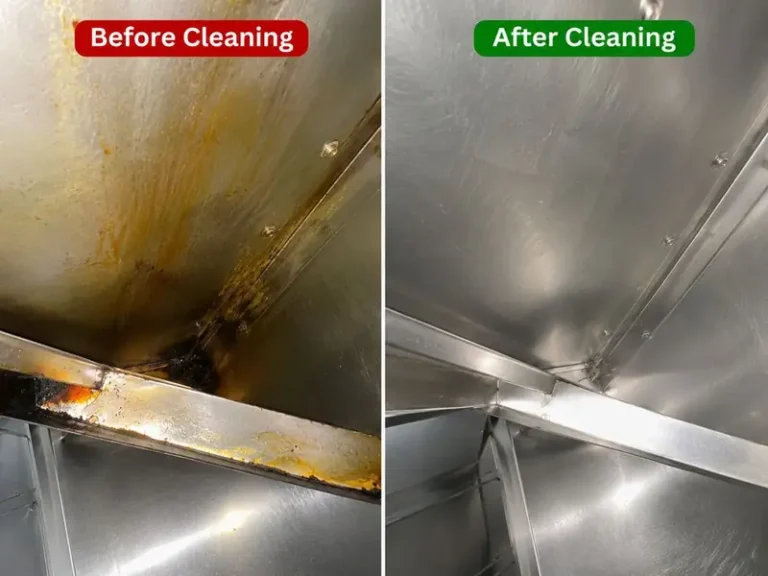
Canopy cleaning covers accessible canopy interiors, stainless steel surfaces, grease gutters, extraction openings and the plenum behind the filters. Grease behind the filters, in the plenum, is often heavier than what you can see.
How Grease Build-Up Turns a Kitchen Exhaust Into a Fire Risk
Grease residue inside range hoods and ducting is a recognised cause of restaurant fires. Fire can travel from the cooking line into the canopy and along ductwork, where it is hard to reach and extinguish.
How to Choose a Kitchen Exhaust Cleaning Company in Melbourne: 10 Questions to Ask
Ask exactly which components are included: canopy, plenum, ducts, fan and filters. Check insurance, safety arrangements for roof work and how chemicals are managed.
More quick answers (17)
Grease Filter Exchange vs In-House Filter Cleaning: Which Suits Your Kitchen?
Grease filters capture part of the airborne grease before it reaches the ducts, so they need frequent care. In-house cleaning suits kitchens with light cooking, trained staff and suitable cleaning facilities.
7 Signs Your Restaurant Kitchen Exhaust Needs Cleaning
Visible grease, dripping, soiled filters and smoke lingering in the kitchen are common warning signs. Overdue cleaning records are a sign on their own, even if the canopy looks clean.
Restaurant Kitchen Exhaust Cleaning Checklist: Daily, Weekly and Monthly
Your team handles quick daily and weekly checks; specialists handle the canopy interior, plenum, ducts and fan. Filters need the most frequent attention in high-grease kitchens.
What Happens If You Don't Clean Your Kitchen Exhaust?
Grease keeps accumulating in the canopy, plenum, ducts and fan every time you cook. Accumulated grease is combustible and can help a fire spread through the exhaust system.
Kitchen Exhaust Maintenance Records: What to Keep and Why
Keep dates, the scope cleaned, before-and-after photos, inaccessible areas and recommendations for each clean. Add your in-house filter and gutter checks to the same file.
Commercial Kitchen Ventilation Requirements in Australia: NCC, AS 1668 and Food Standards
NCC clause F6D12 covers kitchen local exhaust ventilation for larger cooking setups. Under the Deemed-to-Satisfy Provisions, exhaust hoods must comply with AS 1668.1 and AS 1668.2.
Landlord or Tenant: Who Is Responsible for Kitchen Exhaust Cleaning in Victoria?
Responsibility depends on the lease, the building and who owns the exhaust equipment. Under Victoria’s Retail Leases Act, landlords must maintain landlord-owned plant and equipment; tenants must keep premises clean and in good order.
Kitchen Exhaust Cleaning and Insurance: What Insurers May Look For
Some insurance policies include conditions about kitchen exhaust inspection, cleaning and records. Published insurer guidance gives minimum cleaning examples and calls for more in heavy-use kitchens.
Why Is Grease Dripping From My Kitchen Canopy?
Common causes are full or blocked grease gutters, soiled or badly fitted filters, and heavy build-up in the plenum. Condensation mixing with grease can also run down canopy surfaces.
Kitchen Exhaust Duct Cleaning: How It Works and Why It Matters
Grease settles along horizontal runs, vertical risers, bends and transitions inside the ductwork. Ducts are cleaned through access openings using scraping, brushing and controlled degreasing.
Rooftop Exhaust Fan Cleaning and Maintenance: A Practical Guide
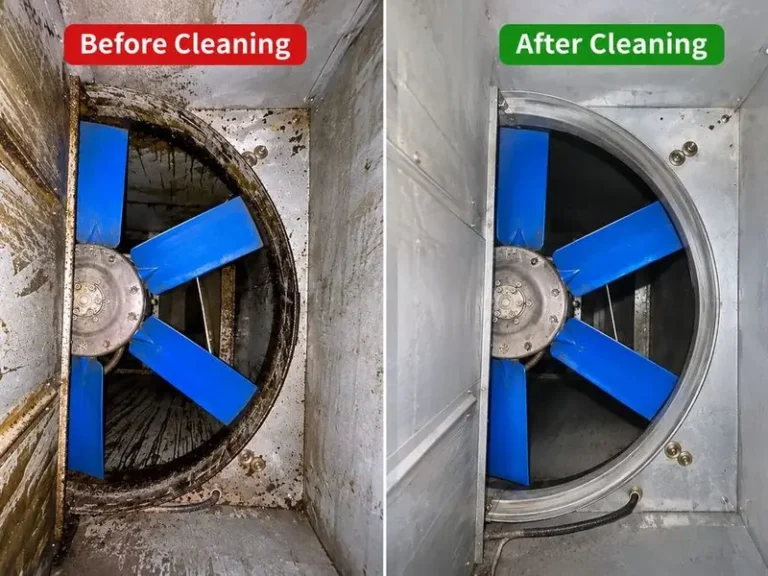
Grease builds up on fan blades, impellers and housings and can affect equipment condition. Cleaning removes grease; servicing covers mechanical and electrical checks by qualified personnel.
Why Is My Kitchen Exhaust Not Pulling Smoke? 8 Common Causes
Blocked filters and greasy ducts are common, easy-to-check causes of poor extraction. Fan faults, belts, airflow imbalance and design issues need a qualified technician.
Baffle Filters vs Mesh Filters: Choosing and Cleaning Commercial Grease Filters
Baffle filters use angled channels that make grease-laden air change direction; mesh filters trap grease in layers of mesh. Stainless steel baffle filters are widely used in commercial canopies and are designed to be cleaned and reused.
Kitchen Exhaust Cleaning for Fast Food and Takeaway Shops
Frying and grilling produce more grease-laden vapour than most other cooking. High-grease kitchens usually need more frequent filter, canopy and duct cleaning.
Kitchen Exhaust Cleaning for Aged Care, Hospitals and Schools
Institutional kitchens run to fixed meal times, so cleaning must be planned around service. Site access, induction and sign-in rules often apply in healthcare and education settings.
DIY vs Professional Kitchen Exhaust Cleaning
Staff can usually handle filters, gutters, drip trays and exterior wipe-downs. The plenum, ducts and rooftop fan need trained contractors with access and safety planning.
Kitchen Exhaust Glossary: Canopy, Plenum, Baffle, Riser and More
A kitchen exhaust system runs from the canopy, through filters and plenum, along the ducts to the exhaust fan. The plenum is the chamber behind the filters; it often holds more grease than the visible canopy.
Explore our services
From Advice to a Cleaner Kitchen Exhaust System
When you are ready, Apex can help. Within the agreed scope, we clean all accessible and reachable areas of your kitchen exhaust system.
01
Canopy & Rangehood Cleaning
Canopy interiors, plenums and grease gutters.
View service →
02
Exhaust Duct Cleaning
Horizontal ducts, vertical risers and bends.
View service →
03
Exhaust Fan Cleaning
Rooftop fans, blades, impellers and housings.
View service →
04
Grease Filter Exchange
Scheduled swaps of dirty filters for clean ones.
View service →
Free quote
Get a Free Commercial Kitchen Exhaust Cleaning Quote in Melbourne
Read enough? Tell us about your kitchen, your location and the services you need, and we can discuss a quotation for canopy, duct, exhaust fan and grease filter cleaning.
Apex Commercial Exhaust Pty Ltd publishes practical guides on commercial kitchen exhaust cleaning, canopy cleaning, exhaust duct degreasing, rooftop exhaust fan cleaning, grease filter cleaning and exchange, cleaning costs and AS 1851, for commercial kitchens across Melbourne and Victoria.